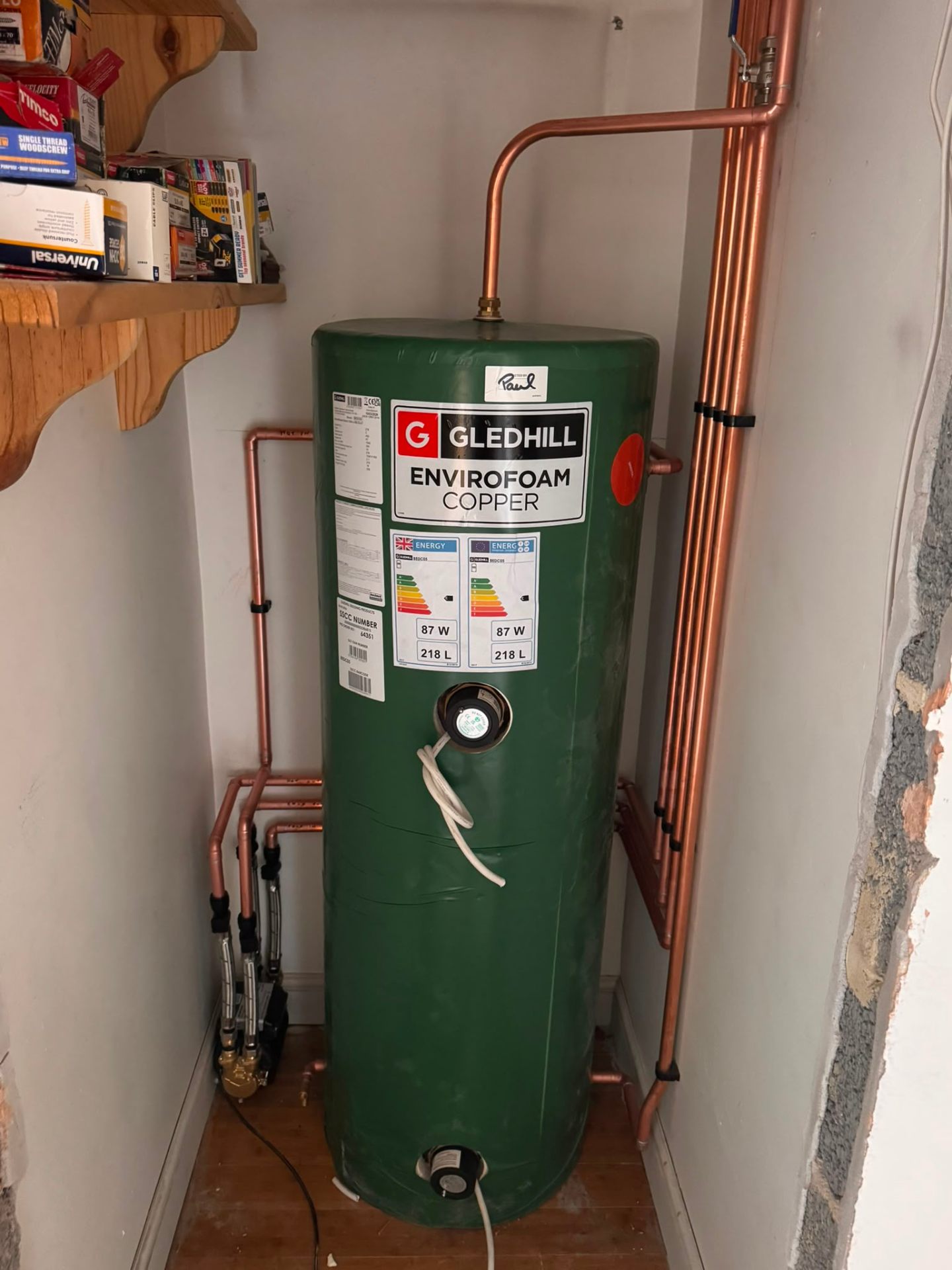
Why G3 matters (legally and practically)
G3 is the qualification for unvented hot water systems, it's part of the Building Regulations. Anyone installing, servicing or repairing an unvented cylinder must hold G3. Non-G3 work is not lawful and cannot be notified to Building Control. Calvin is G3 qualified.
Safety device stack explained
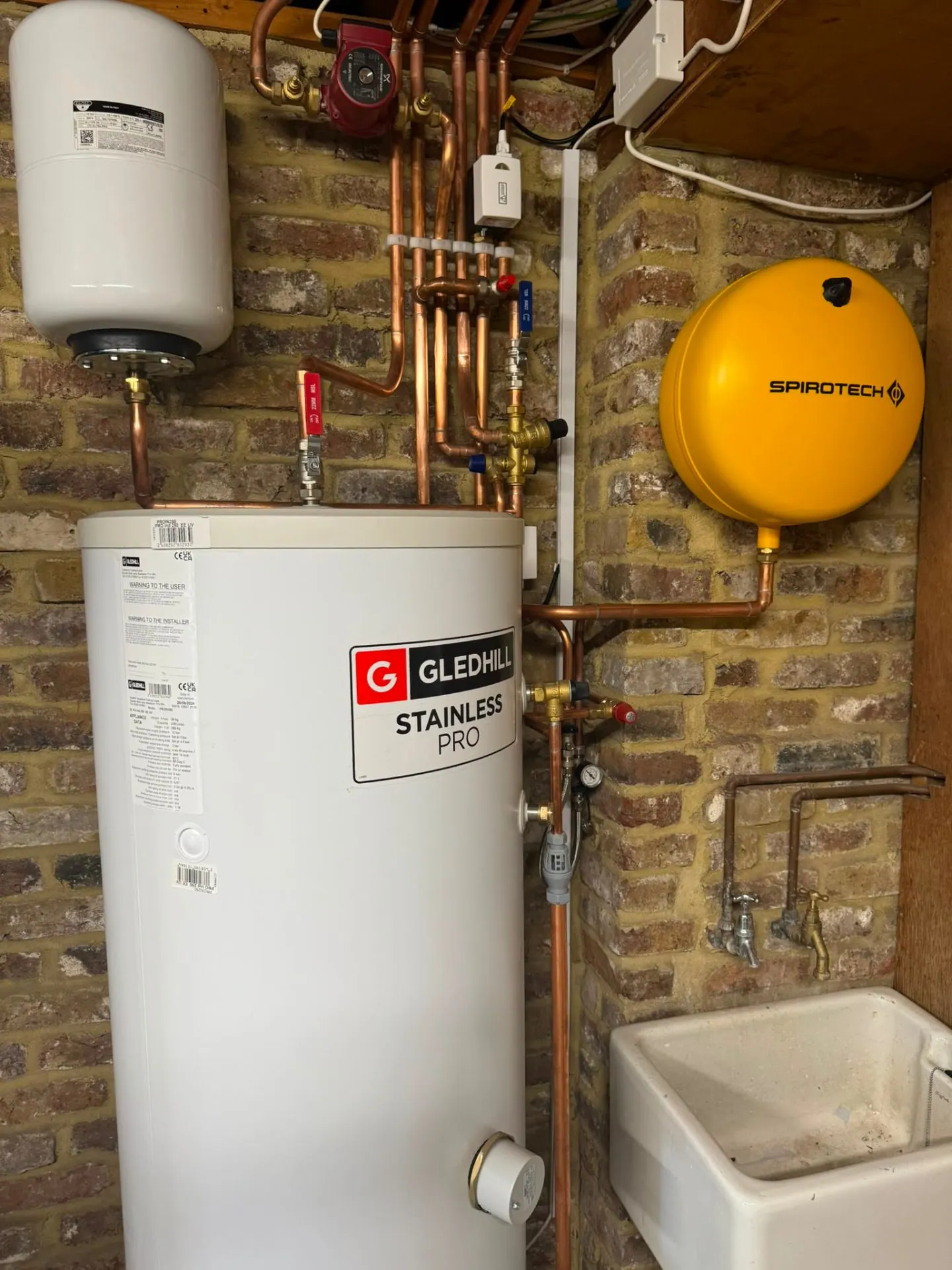
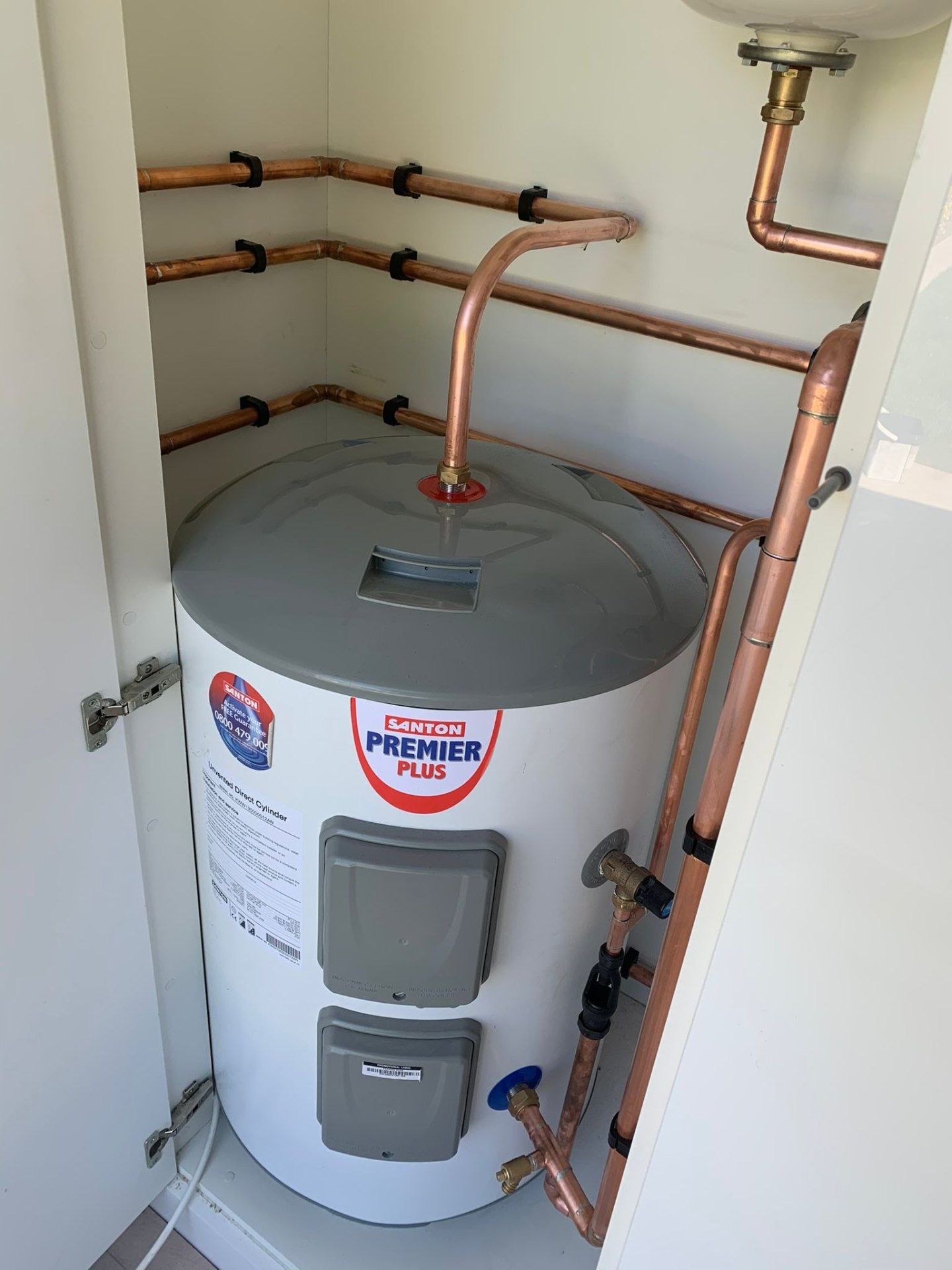
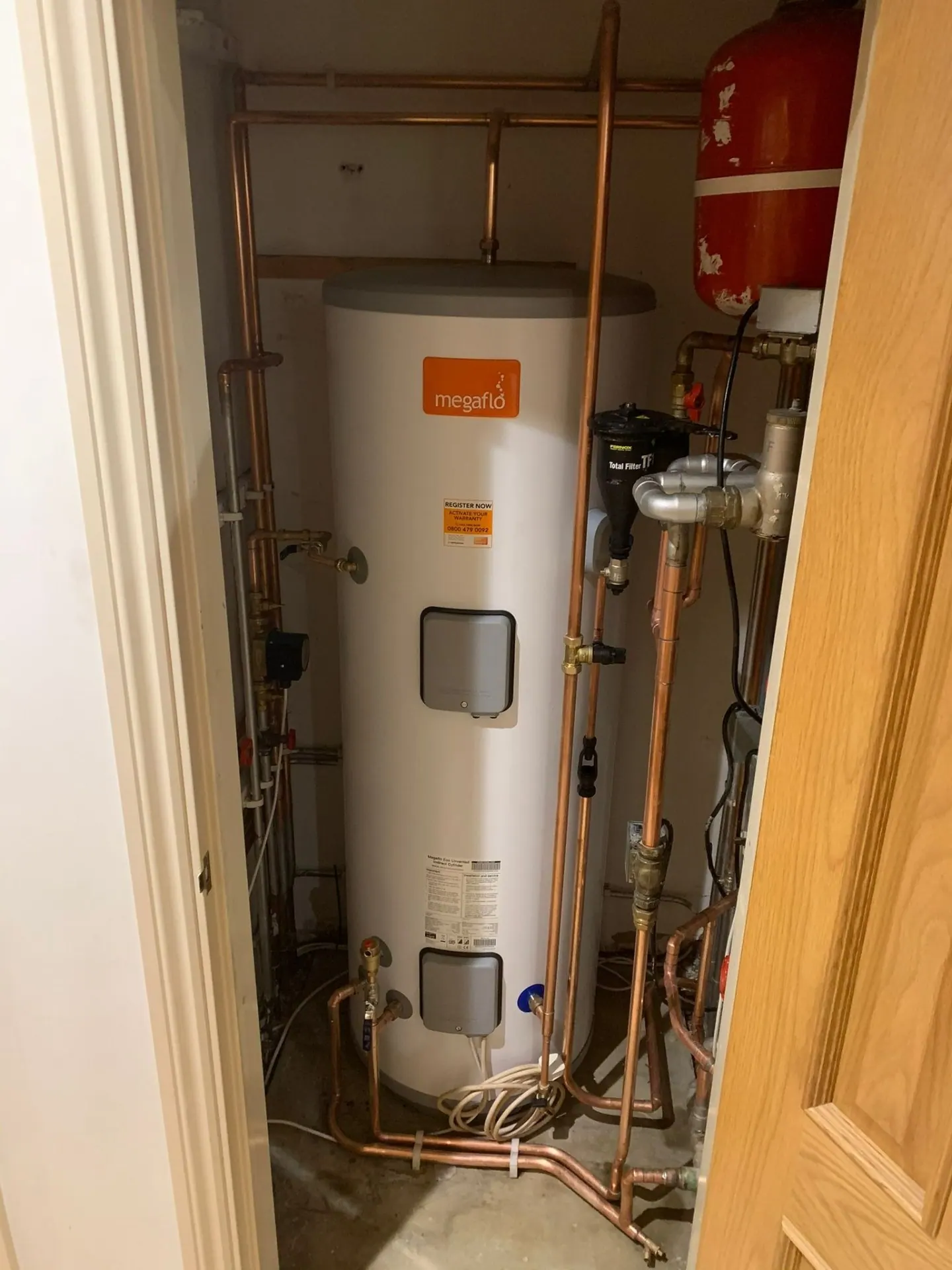
Every unvented cylinder needs: an expansion vessel (accommodating heated water expansion), a pressure relief valve (releasing water if pressure exceeds design), a temperature/pressure relief valve (belt-and-braces if the PRV fails or a thermostat fails), a tundish (visible air-break so you can see if the PRV is discharging), and correctly-sized discharge pipework routing safely to outside or a tundish drain.
Sizing correctly
150L is entry-level for a small family; 210L is common for a 2-bathroom home; 300L+ for larger properties or high-demand households. Sizing is about simultaneous demand plus reheat time, undersizing is the more common mistake.
Discharge pipework, the detail that's usually wrong
The G3 rules on discharge pipework are specific, pipe diameter, maximum length, number of bends, and safe termination point are all defined. A properly designed install routes discharge to a visible outside termination or an approved internal tundish arrangement. Getting this wrong is the number-one failure point of non-specialist installs.
Annual service, what it covers
Expansion vessel pre-charge tested and re-pressurised, PRV manually operated to verify it seats correctly, T&P valve verified, tundish checked for signs of leakage, cylinder thermostat tested, working pressures recorded. All logged on a service sheet.